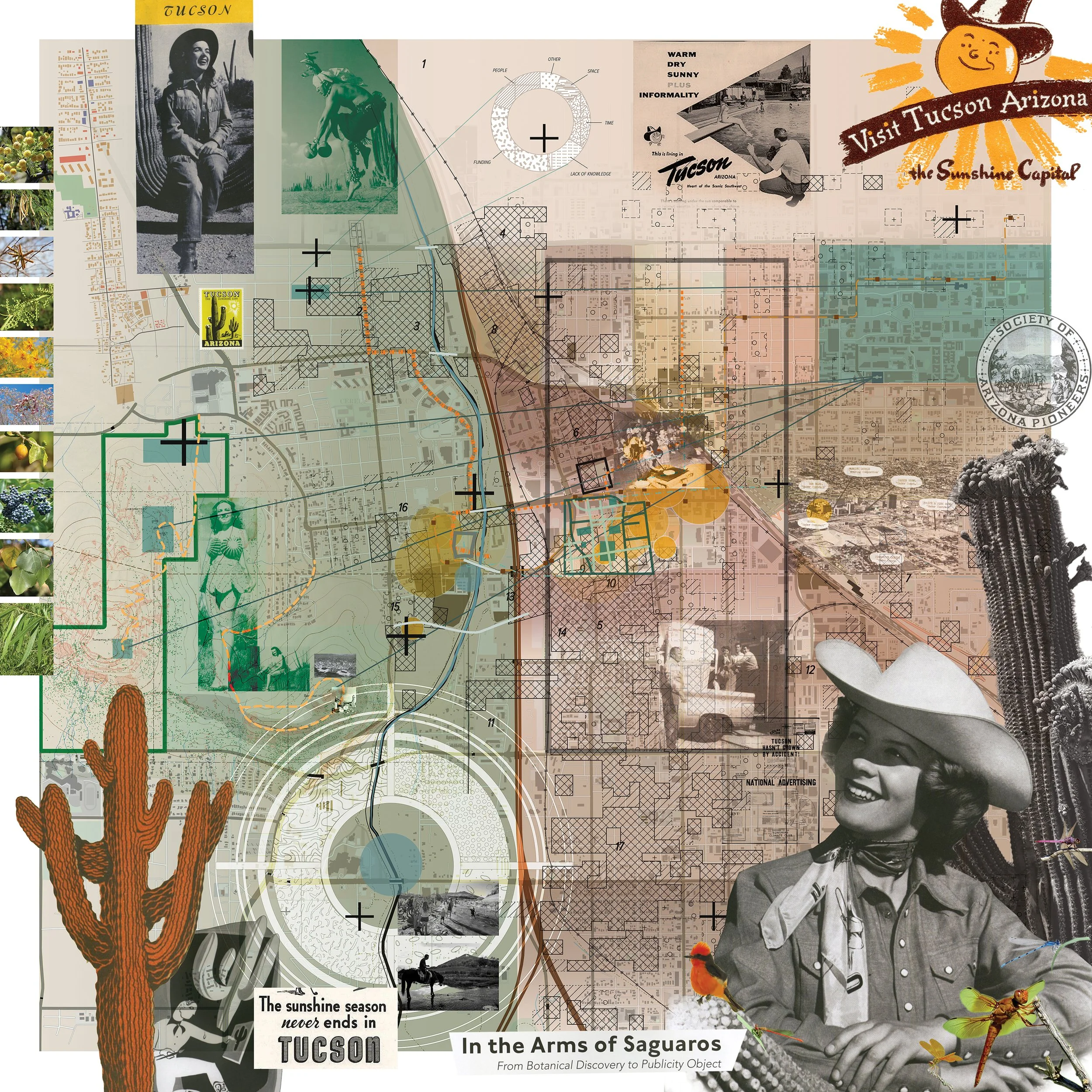
This layered data map collage examines the historic Downtown Tucson area and the adjacent Santa Cruz River basin through overlapping layers of geographic, ecological, cultural, and social data. The composition brings together water systems, river hydrology, gentrification patterns, native plant species, saguaro distributions, Indigenous tribal influence, regional neighborhoods, gathering spaces, community gardens, school and university programs, and the legacy of projects such as the Sunshine Mile. Historical imagery—including Tucson’s 1960s efforts to attract new residents—adds another layer, revealing how the city has marketed, developed, and transformed its relationship to place over time.
Rather than presenting these subjects as isolated data sets, the collage intentionally allows them to intersect, overlap, and occasionally contradict one another. The resulting map becomes a visual record of Tucson as a place shaped by water, migration, development, Indigenous presence, ecological systems, and contested ideas of growth. At its core, the work explores how Tucson’s history and identity are inseparable from the Santa Cruz River and the broader Sonoran Desert, while also asking how patterns of development and gentrification have reshaped access to land, culture, and community. The collage ultimately frames Tucson as a landscape in constant negotiation—between water and scarcity, preservation and development, Indigenous histories and contemporary growth, and the ecological character of the desert and the city built within it.
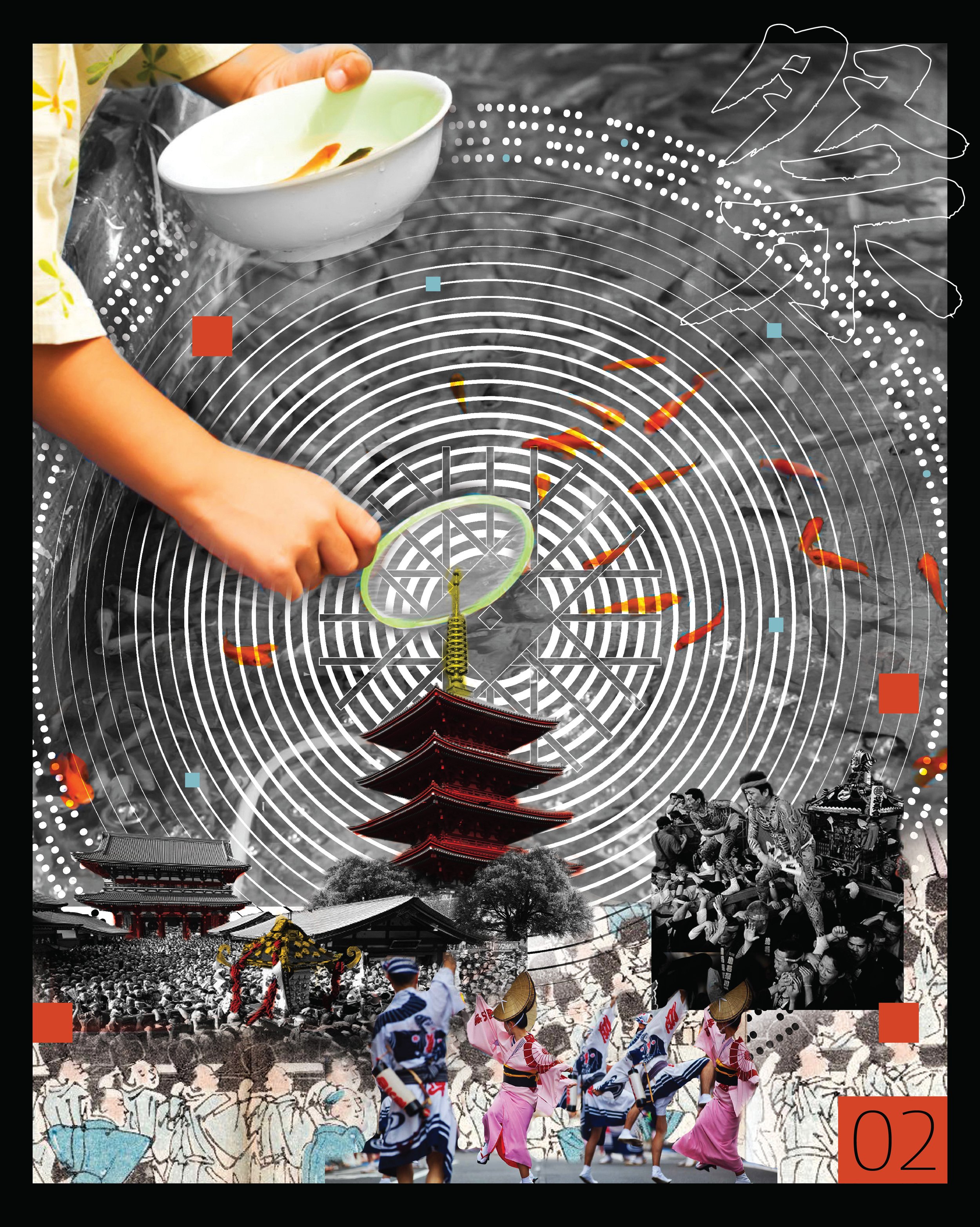
This layered data collage explores the cultural systems embedded within Japanese matsuri, bringing together movement, rhythm, ritual, and the spatial practices that give these festivals their meaning. The composition overlaps matsuri dance steps, taiko rhythms and beats, fishing traditions using rice-paper wands, sacred shrines, procession routes, and other visual references to the physical and symbolic language of festival culture. These layers are considered alongside the historical and contemporary presence of yakuza organizations and their documented relationship to certain festival traditions, revealing the complexity of the social networks that have shaped and participated in these public cultural spaces.
At the center of the collage is the idea of movement as cultural transmission. Shrines are carried into new spaces, dances are passed from one generation to another, rhythms coordinate bodies and communities, and ritual objects transform ordinary streets into temporary sacred landscapes. The overlapping information creates a visual system in which choreography, sound, procession, and place become interconnected. Rather than treating matsuri as simply celebrations, the work considers them as living cultural frameworks—where history, spirituality, community, identity, and movement are continuously carried forward, adapted, and reinterpreted.